Cortisol and the Female Brain:
Why Stress Hits Differently After 35

The stress response you have at 43 is genuinely, physiologically different to the one you had at 33. Not because you've become weaker or less resilient. Because oestrogen — which most people think of as a reproductive hormone — is also one of the primary regulators of your stress response. As it begins its long, erratic exit, that system becomes measurably harder to manage.
I know this now. I wish I'd known it when I was grinding through exhaustion convinced the problem was a lack of discipline. When I was managing a 12-hour shift with complete calm, then falling apart at a slow internet connection. When the toll of a hard week felt like it was accruing rather than resetting — and no amount of sleep or willpower seemed to bring me back to baseline.
The answer wasn't a character flaw. It was cortisol. Specifically: cortisol in a female brain in its forties, as oestrogen starts its long, irregular exit.
If any of that sounds familiar — less resilient, more reactive, simultaneously exhausted and wired — you're not imagining it. Something has genuinely changed. And understanding what it is changes how you relate to it.
First — Cortisol Isn't the Villain
Everyone talks about "lowering cortisol" like the goal is to have none of it. But healthy cortisol is what gets you out of bed. It peaks in the morning to mobilise energy and sharpen focus, gradually declines through the day, and is low by evening so melatonin can rise and you can sleep. When the rhythm is working, you don't notice cortisol at all. You just feel like yourself.
The problem is when the rhythm breaks — when cortisol stays too high at night, too low in the morning, or flat across the whole day. That's when you feel it. And in women over 35, there's a specific reason this happens more easily than it used to.
What Dysregulation Actually Feels Like
Chronic, low-grade, never-quite-switches-off stress — the kind most women in their forties are living with — keeps the stress system stuck in a low hum of activation. Cortisol doesn't spike and return to baseline cleanly. The rhythm gets messy.
- → Waking at 2–4am and unable to return to sleep
- → Racing thoughts at night
- → Wired but exhausted
- → Anxiety without a clear cause
- → Abdominal weight gain
- → Heart palpitations
- → Irritability and low frustration tolerance
- → Profound morning fatigue despite sleeping
- → Can't get going without caffeine
- → Afternoon energy crashes
- → Brain fog and poor concentration
- → Low mood, flat affect
- → Salt cravings
- → Poor recovery from exercise
What Actually Helps — The Evidence-Based Approach
The goal is not to eliminate cortisol — you need it. The goal is to restore appropriate rhythm and blunted peaks. These are the interventions with the most consistent evidence in perimenopausal women:
Ashwagandha (KSM-66 extract) is an adaptogenic herb with more RCT evidence than almost any other botanical for cortisol regulation. A 2019 randomised controlled trial found KSM-66 ashwagandha reduced serum cortisol by 27.9% compared to placebo over 60 days, with significant improvements in stress, anxiety, and sleep quality. The dose that achieved this was 300mg twice daily of a root extract standardised to ≥5% withanolides.
Magnesium glycinate is essential here for two reasons: the adrenal glands use magnesium during every stress response, and NZ women are widely deficient. Chronic stress depletes magnesium, and magnesium deficiency amplifies the stress response — a vicious cycle. 300–400mg elemental magnesium glycinate before bed addresses both.
Vitamin C (500–1000mg daily) — the adrenal glands have one of the highest concentrations of vitamin C in the body, and use it directly during cortisol synthesis. Under chronic stress, depletion is rapid. Supplementing with 500–1000mg daily supports adrenal function and blunts excessive cortisol responses.
Sleep architecture is the foundation. Cortisol rhythm cannot normalise without adequate sleep. The morning cortisol awakening response depends on deep sleep in the final hours before waking. If you are waking at 3–4am (a classic perimenopausal pattern), you are missing the restorative sleep that resets the cortisol cycle. Addressing this — whether through magnesium, hormonal management, or other interventions — must be the first priority.
Reducing stimulant load. Caffeine after midday extends cortisol elevation into the evening, disrupting the natural decline that prepares the body for sleep. Most women in perimenopause find their caffeine tolerance has reduced — their system no longer clears it as efficiently. Cutting to one morning coffee and moving that earlier than usual is one of the highest-leverage, lowest-cost changes available.
Exercise — But the Type Matters More Than You Think
If you've been grinding through HIIT classes convinced you're helping your stress levels, this might be the most useful thing in this article: for women who are already cortisol-loaded — which most perimenopausal women are — high-intensity exercise can raise cortisol further rather than lower it. The relationship between exercise and cortisol is dose-dependent and intensity-dependent, and the evidence has become significantly clearer in the last few years.
A 2025 systematic review and network meta-analysis specifically comparing exercise modalities for cortisol reduction found that moderate-intensity exercise consistently outperforms high-intensity in chronically stressed adults. The sweet spot is 20–30 minutes of moderate aerobic activity — walking, swimming, cycling at a conversational pace. This reliably reduces cortisol in the hours following exercise and improves the cortisol awakening response over time. Going harder doesn't produce better results; for already-stressed systems, it often produces worse ones.
Resistance training is a different story and deserves its own mention. Two to three sessions per week of strength training — at moderate load, not to failure — is one of the best long-term interventions for cortisol dysregulation. It improves insulin sensitivity (which directly supports cortisol regulation), supports muscle mass that perimenopause depletes, and produces measurable improvements in sleep quality, mood, and hot flash frequency. The key is not overtraining: long, punishing sessions spike cortisol. Shorter, focused sessions (30–45 minutes) with adequate recovery are what the evidence supports.
If you're currently exercising hard every day and not recovering — if you feel more wired after workouts rather than calmer — your body may be treating exercise as an additional stressor rather than a recovery tool. Pulling back intensity and adding one or two gentler sessions per week is a legitimate, evidence-based strategy, not a failure of discipline.
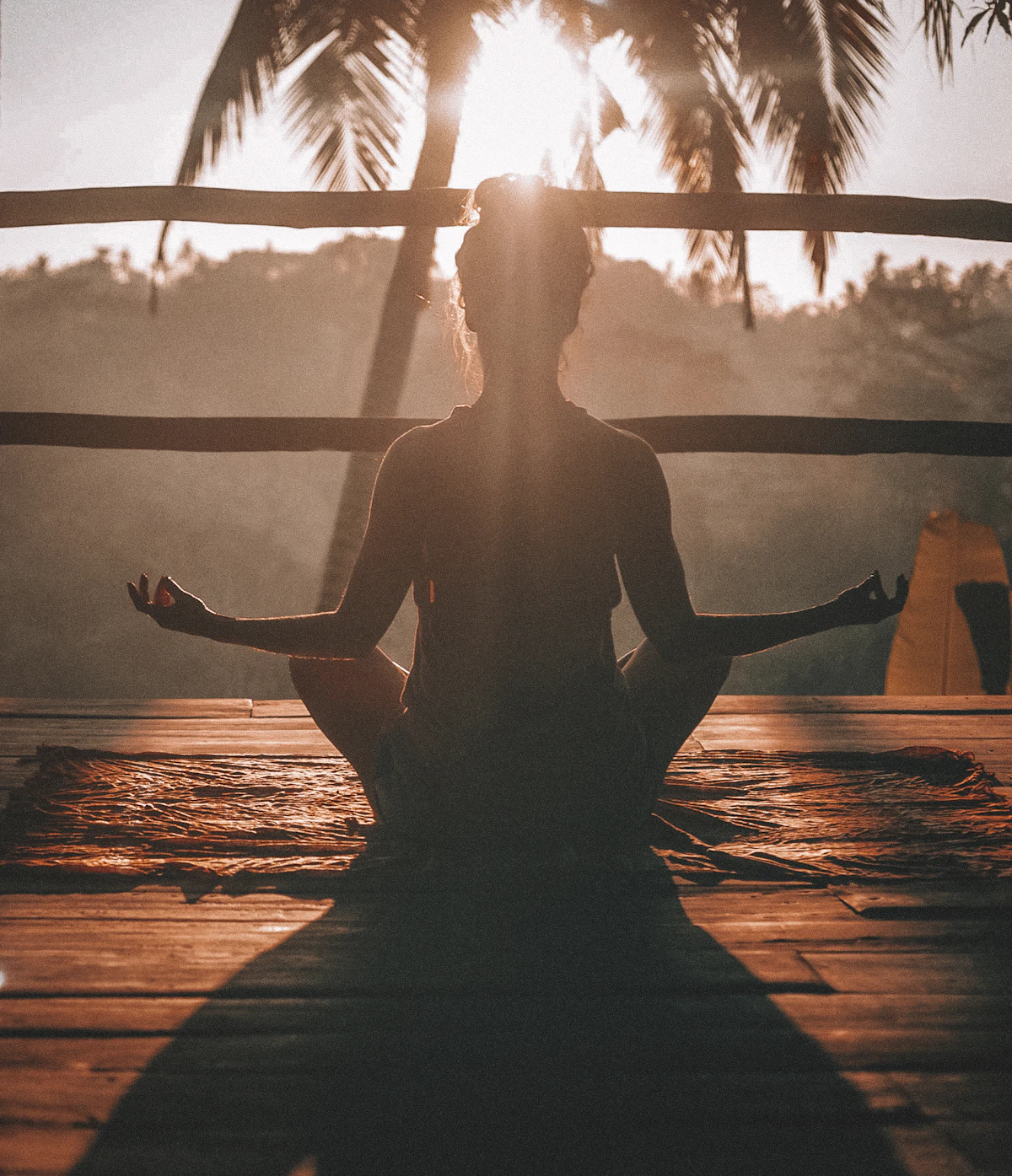
Yoga and Body Balance — The Most Underrated Cortisol Tool
In the same 2025 network meta-analysis that clarified the exercise picture, yoga ranked first out of all exercise modalities tested for cortisol reduction — ahead of aerobic exercise, resistance training, and every other category. The effect size was meaningful (standardised mean difference of −0.59), and the ranking consistency across studies was 93%. That's not a marginal effect. That's a clear signal.
A separate 2025 randomised controlled trial specifically in menopausal women measured cortisol before and after a three-month yoga intervention. The yoga group reduced cortisol by 8.4%. The control group's cortisol increased by 22.3% over the same period. The combination of those two figures tells you something important about what perimenopause does to cortisol when left unaddressed — and what yoga does to interrupt that trajectory.
The mechanism makes sense physiologically. Yoga activates the parasympathetic nervous system (the rest-and-digest counterpart to the stress response), reduces inflammatory markers, lowers heart rate variability in the direction of calm, and — uniquely among physical interventions — directly teaches the nervous system to tolerate discomfort without triggering a stress response. Over time, that translates to a more regulated HPA axis.
Body Balance (the Les Mills class combining yoga, tai chi, and Pilates) works through the same mechanisms. Tai chi has its own strong evidence base for cortisol reduction and HPA axis regulation — it's ranked alongside yoga in the research — and the combination format means you're getting multiple parasympathetic-activating inputs in one session. If Body Balance is accessible to you, it's an extremely well-targeted intervention for exactly the cortisol pattern most perimenopausal women are dealing with.
The consistency of practice matters more than the intensity of any single session. Three shorter sessions per week produces better outcomes than one long one. The nervous system learns through repetition, not heroism.
A 2025 network meta-analysis of exercise modalities for cortisol reduction in psychological distress ranked yoga first (SUCRA 93%), followed by qigong and multicomponent movement. A concurrent 2025 RCT in menopausal women found yoga reduced cortisol by 8.4% over three months while the control group saw a 22.3% increase (P < 0.01). Across RCTs, yoga consistently reduces cortisol by 10–25%. A separate review of 2,028 women found yoga also significantly improved sleep quality, anxiety, and depressive symptoms during perimenopause.
References: Network meta-analysis, PMC12736704 (2025); RCT on yoga and hormonal regulation in menopausal women, HRPUB (2025); International Menopause Society RCT review (2024).
Breathwork — Five Minutes That Actually Move the Needle
Slow, diaphragmatic breathing is one of the fastest cortisol interventions available — and one of the most consistently underestimated. A 2025 systematic review confirmed that diaphragmatic breathing measurably decreases salivary cortisol, lowers both systolic and diastolic blood pressure, and reduces self-reported stress indices. It works because slow breathing directly activates the vagus nerve, which is the primary brake on the stress response.
The target is roughly 5–6 breath cycles per minute (compared to the average resting rate of 12–15). A simple approach: inhale for 4 counts, exhale for 6. The longer exhale is the key — it's the exhale phase that activates the parasympathetic response. Even five to ten minutes produces measurable cortisol effects. Box breathing (4-4-4-4) is an alternative that's easy to remember and well-supported.
The Wim Hof Method — which combines specific breathwork with cold exposure — has been tested in women with high stress and depressive symptoms in an RCT. Both the Wim Hof group and the slow-breathing comparison group showed meaningful reductions in anxiety, perceived stress, and cortisol reactivity to acute stressors. Cold exposure added to the breathwork didn't produce significantly greater cortisol reduction than slow breathing alone, but did improve stress resilience and mood. The takeaway: if cold showers appeal to you, the combination is worth exploring; if they don't, the breathwork alone delivers most of the benefit.
Practically: five minutes of slow breathing before sleep, or during the 2–4am wake window, is one of the most direct interventions you can do for the nighttime cortisol spike pattern. It costs nothing, requires no equipment, and works immediately.
Psychobiotics — The Gut-Brain Axis and Cortisol
This is the most exciting area of emerging evidence in cortisol research, and it's moving fast. The gut microbiome communicates directly with the HPA axis — the hormonal control system that regulates cortisol — through what's now called the gut-brain axis. Specific bacterial strains can modulate the stress response at a neurochemical level, influencing serotonin, GABA, and cortisol production in ways that conventional probiotics (focused on digestion) don't.
These are called psychobiotics — probiotics specifically selected for their effects on psychological and neuroendocrine outcomes rather than gut health per se. A 2024 meta-analysis of 46 randomised controlled trials found that probiotic supplementation produced significant reductions in salivary cortisol. The effect was most consistent with specific strains rather than general probiotic blends.
The two best-evidenced strains right now are Lactobacillus helveticus R0052 + Bifidobacterium longum R0175 — this combination (sold as Probio'Stick by Lallemand) has multiple clinical trials showing reduced cortisol, improved anxiety scores, and better stress resilience. Bifidobacterium longum 1714 has also shown clinical improvements in memory-related performance, reduced cortisol, and lower perceived daily stress. Look specifically for products that list these strains by name — the strain designation matters, because not all lactobacillus and bifidobacterium products contain the clinically tested varieties.
This area of research is still maturing, but the mechanistic rationale is solid and the trial evidence is accumulating quickly. If you've addressed the basics (sleep, magnesium, ashwagandha) and you're still struggling, a targeted psychobiotic is a logical next layer.
Adaptogenic Mushrooms — Reishi, Cordyceps, and Lion's Mane
Functional mushrooms have earned enough clinical attention to be worth discussing honestly — which means being clear about which ones have actual evidence for cortisol specifically, and which are better positioned for adjacent benefits.
Reishi (Ganoderma lucidum) has the strongest case for direct HPA axis and adrenal support of the three. Its active compounds — triterpenoids and beta-glucans — appear to modulate adrenal function and reduce cortisol overproduction under chronic stress. It also has some evidence for supporting oestrogen metabolism under chronic stress conditions, which is directly relevant to the perimenopausal picture. Human trials are still limited in size, but the mechanistic evidence and safety profile are both strong. Reishi is best positioned as a longer-term adaptogen — effects accumulate over weeks rather than appearing immediately.
Cordyceps works primarily at the adrenal energy level rather than as a direct cortisol-lowering agent. It supports the adrenal glands' capacity to produce consistent energy without the cortisol spikes that come from pushing through exhaustion — useful if fatigue and energy depletion are your primary symptoms rather than anxiety or insomnia. A 2025 randomised controlled trial found a blend including cordyceps improved stress, fatigue, and sleep quality over eight weeks.
Lion's Mane is primarily a cognitive and neurological support supplement — its cortisol effects are indirect, working via the gut-brain axis and NGF stimulation rather than direct adrenal modulation. A 2023 double-blind trial found a trend toward reduced subjective stress after 28 days. It's a valuable supplement for brain fog and cognitive symptoms, but if cortisol regulation is your primary goal, reishi is the better-targeted choice. Where Lion's Mane earns its place in a cortisol protocol is as a stack ingredient alongside reishi — supporting the neurological resilience that chronic cortisol exposure erodes.
As with all mushroom supplements: whole fruiting body extracts are significantly preferable to mycelium-only products. The beta-glucan content — the primary active compound — is dramatically higher in fruiting body extracts, and this should be declared on the label.
Cognitive Behavioural Therapy — Addressing the Thought Loops That Keep Cortisol High
Cortisol is a physical hormone responding to perceived threat. And perceived threat doesn't require an actual threat — the nervous system responds to thought patterns in the same way it responds to real stressors. Cognitive Behavioural Therapy (CBT) works directly on the habitual thought patterns that keep the stress response activated: catastrophising, hypervigilance, worst-case forecasting, the kind of mental hyperarousal that runs on loop at 3am.
The evidence for CBT reducing cortisol in chronically stressed adults is consistent, and specifically in perimenopause, it addresses the feedback loop between hormonal anxiety and habitual stress thinking. Many women in their forties have accumulated years of high-functioning stress management — carrying a lot, managing perfectly, never quite recovering — and the hormonal shifts of perimenopause remove the buffer that made this sustainable. CBT offers practical tools to interrupt those patterns rather than simply managing the physical symptoms they produce.
If you're already familiar with CBT-I for sleep (which is discussed in the brain fog article), regular CBT extends the same retraining approach to waking stress and anxiety patterns. The two overlap significantly. Online programmes are available; in-person therapists with specific experience in women's midlife health are worth seeking out if the symptoms are significantly affecting your quality of life.
Two More Worth Knowing About: Phosphatidylserine and L-Theanine
Phosphatidylserine (PS) is probably the most well-evidenced supplement specifically for blunting acute cortisol spikes — yet it remains largely unknown outside sports nutrition circles, where it was first studied for exercise-induced cortisol. Multiple RCTs have shown it reduces the cortisol response to acute psychological and physical stress without blunting the baseline response you need. The mechanism: PS is a phospholipid that's a natural component of cell membranes, concentrated in the brain, and involved in regulating the HPA axis feedback loop. A 300–400mg daily dose is what the trials used.
L-theanine is an amino acid found in green tea that reduces the cortisol and physiological arousal response to acute stress — without causing sedation. The research shows it specifically blunts the anxiety and cortisol spike that follows acute stressors rather than suppressing baseline levels. For women who experience sudden cortisol surges — the reactive, triggered, out-of-proportion stress response that perimenopause amplifies — L-theanine taken at 100–200mg as needed (or daily) can meaningfully reduce that reactivity. It also stacks well with magnesium glycinate for the evening routine.
VelaOra uses affiliate links. If you purchase through these links, VelaOra earns a small commission at no extra cost to you. Sarah only recommends products she has independently assessed for quality and evidence.
The stress response you have at 43 is not a character flaw. It is a biological system that has changed — and like any biological system, it responds to the right inputs. The evidence is there. The tools exist. You don't have to white-knuckle your way through perimenopause.
— Sarah, VelaOra
More like this, every week.
Science-backed articles for NZ and Australian women navigating the seasons nobody prepares you for.
Join VelaOra Free →Live healthy. Love lots. Be your best you. 🌿 — Sarah xx
Sarah writes under a pseudonym, which gives her the freedom to say exactly what she thinks — no institutional filters, no conflicts of interest. She is a practising scientist with 25 years in women's health.